Science for Progress

because science is fundamental in the 21st century

« Previous PageNext Page »

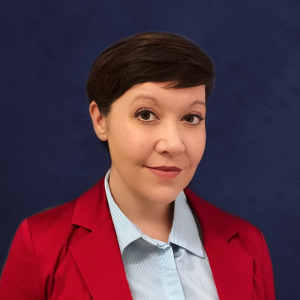
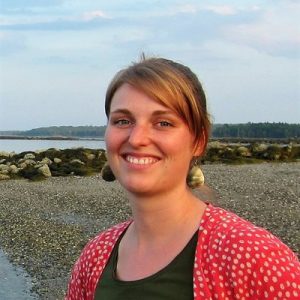
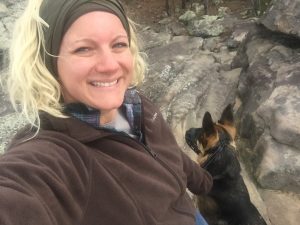
SfProcur curator June 4-9, Amanda Lee Glaze – @EvoPhD

Dr. Amanda L. Glaze is Assistant Professor for Science Education at Georgia Southern University. Her position allows her to do both, applied science research and education research. She is looking for ways that academics can support and prepare the next generation of science teachers and thinkers. Teachers are the ones who have the single greatest opportunity to have an impact on public perceptions in science.

Amanda focuses on evolution education from kindergarten to 12th grade (K-12). Evolution education is noted as the greatest failing of science education in the 21st century in the USA. This is mostly because many people still find the theory of evolution to be fundamentally anti-religious, and thus “controversial”. These deeply seeded misconceptions about science are used as grounds for anti-science legislation, climate change denial, and other contentious points.

Amanda engages frequently in talks about science and religion, to share her own story of navigating conflict between her highly religious background and being a scientist in a field the public sees as very anti-religious and controversial.

During her week on @sfprocur, Amanda wants to highlight the importance of having a scientific worldview. Science is for everyone and understanding the nature of science is key to informed decision making and building a better world.
background

(more…)

about Dennis Eckmeier

Dennis founded Science for Progress. He received a PhD in neuroscience in 2010 in Germany. Until 2018 he worked as a postdoc in the USA, and Portugal. In 2017 he co-organized the March for Science in Lisbon, Portugal. Dennis is currently a freelancer.

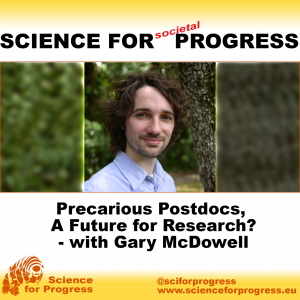
27 Precarious Postdocs. A Future for Research? – with Gary McDowell

Postdocs are, besides graduate students, the main workforce in academic research. Following the PhD, the postdoc position is the only way to follow a research career within academia. Many PhDs around the world are advised to go to the USA for a postdoc – or two – because it is known for its large research output and high quality research institutes. Around two thirds of postdocs in the USA are foreign born.

(more…)

about Dennis Eckmeier

Dennis founded Science for Progress. He received a PhD in neuroscience in 2010 in Germany. Until 2018 he worked as a postdoc in the USA, and Portugal. In 2017 he co-organized the March for Science in Lisbon, Portugal. Dennis is currently a freelancer.

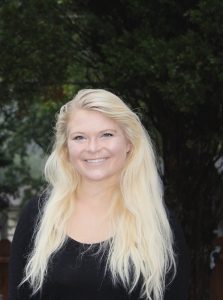
SfProcur curator May 21 – 24: Monika Sziron – @msziron

Monika Sziron M.A. is a PhD candidate
in technology and humanities at Illinois Institute of Technology. She is interested in the intersection of technology and society, and she likes looking at the blending of technology and humanity.

Monika Sziron’s work has focused on AI, robots, animals, cyborgs, people, and ethics.

During her week on @sfprocur, Monika Sziron plans to talk about AI, Robots, and Cyborgs!

background

(more…)

about Dennis Eckmeier

Dennis founded Science for Progress. He received a PhD in neuroscience in 2010 in Germany. Until 2018 he worked as a postdoc in the USA, and Portugal. In 2017 he co-organized the March for Science in Lisbon, Portugal. Dennis is currently a freelancer.

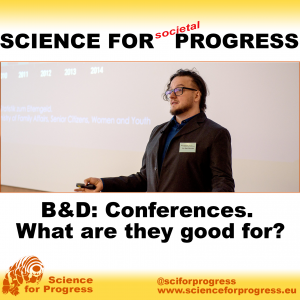
26 B&D: Conferences. What are they good for?

In March, Bart visited the bi-annual meeting of the German Neuroscience Society (NWG) in Göttingen. And he took his brand new digital audio recorder with him! So this is the first time we can present impressions from the field!

Bart interviewed professor Karin Nordström, graduate student Robert Kossen, and a former researcher and now entrepreneur John Stowers about what brings them to the conference, and when and why students should begin attending.

(more…)

about Dennis Eckmeier

Dennis founded Science for Progress. He received a PhD in neuroscience in 2010 in Germany. Until 2018 he worked as a postdoc in the USA, and Portugal. In 2017 he co-organized the March for Science in Lisbon, Portugal. Dennis is currently a freelancer.

SfProcur curator May 14 – 19: Sherilyn Burris -@_sherilynburris

If a week goes by without me Tweeting about infectious diseases, something is seriously wrong.

Sherilyn Burris is a Certified Emergency Manager, and holds master degrees in Occupational Safety and Health & Environmental Management, as well as Public Administration and Emergency.

She works at Cascia Consulting LLC as an adviser for government public safety, corporate, and nonprofit disaster and business continuity programs. In this way, she can help a variety of stakeholders with challenging issues such as climate change and emerging technologies.

Sherilyn is particularly passionate about Human behavior in disasters. She brings attention to the unique ways people access, understand, and use risk data to make personal and community decisions, for example during fires, floods, hurricanes, or earthquakes. She gives workshops, writes publications, and communicates widely on social media.

During her curation on @sfprocur, Sherilyn wants to convey that “Science shows up in the most unexpected places. Government: science. Disasters: science. Data: science. Disease outbreaks: science.” And she will do so with JRR Tolkien references!

background

(more…)

about Dennis Eckmeier

Dennis founded Science for Progress. He received a PhD in neuroscience in 2010 in Germany. Until 2018 he worked as a postdoc in the USA, and Portugal. In 2017 he co-organized the March for Science in Lisbon, Portugal. Dennis is currently a freelancer.

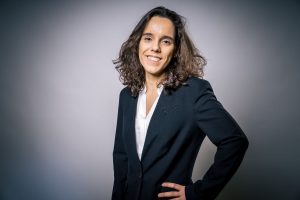
SfProcur curator May 7 – 12: Filipa M. Ferreira – @science_glamour

Filipa M. Ferreira, MSc, is a PhD candidate in neuroimmunology in Zurich, Switzerland. She studies the onset and development of multiple sclerosis (MS). Filipa is also involved with the
Young Scientist Network (LSZYSN) of Life Science Zurich, a student organization that brings together life science companies and early career scientists.

Filipa informs early career scientists about the jobs they can find outside academia, about the skills they need to develop, and about opportunities for entrepreneurship during and after the PhD.

In her week at @SfPRocur, Filipa wants to make clear that there’s no such thing as an ‘alternative’ career in science. “A conscious decision to stay in academia is as brave as the decision to leave it.”

background

(more…)

about Susan Leemburg

Susan received her PhD in neuroscience in 2011 in Zurich, Switzerland. She worked as a postdoctoral researcher until 2017 and is currently looking for the next adventure.

25 SciComm: Pint of Science – with Elodie Chabrol

In May will be the next Pint of Science event!

Pint of Science is an annual festival that was founded by Michael Motskin and Praveen Paul. Every May scientists present their research to a public audience in a pub or a bar. It started in the UK in 2014, and it’s now spread throughout the world, with official events in 24 countries. In 2018, 120 000 people visited Pint of Science events. The events are planned by local teams, which make up the 3000 volunteers.

In this episode I spoke with Pint of Science organizer Elodie Chabrol, a former neuroscience researcher, who is now a full-time science communicator.

(more…)

about Dennis Eckmeier

Dennis founded Science for Progress. He received a PhD in neuroscience in 2010 in Germany. Until 2018 he worked as a postdoc in the USA, and Portugal. In 2017 he co-organized the March for Science in Lisbon, Portugal. Dennis is currently a freelancer.

SfProcur Curator April 30 – May 5: Susanne Tönsmann – @pwa_zurich

Dr. Susanne Tönsmann is managing director of the Participatory Science Academy in Zurich, Switzerland.

There, Susanne provides scientists and non-scientist citizens with the knowledge and training they need to efficiently work together. The core idea behind their work is to have citizens play an active role in science, rather than just paying for it via their taxes. Susanne and their colleagues are trying different methods and formats to make that happen. This job provides a wonderful opportunity to engage the public (“whoever that is”) and to make science more relevant to the many problems that the world faces today.

Susanne thinks that science, scientists and universities have a responsibility to solve real world problems; this should not be a side effect of research, but at the core. However, researchers in academia are mostly rewarded for publications and acquired grant money.

During their week at @SfPRocur, Susanne will discuss how the academic merit system can get in the way of that responsibility, and what could be done to improve things.

background

(more…)

about Susan Leemburg

Susan received her PhD in neuroscience in 2011 in Zurich, Switzerland. She worked as a postdoctoral researcher until 2017 and is currently looking for the next adventure.

SfPRocur curator April 23 – 28: Fanny Gutsche-Jones – @CitSciZurich

Dr. phil. des. Fanny Gutsche-Jones is Community Manager at the Citizen Science Center Zürich in Switzerland, where she works to tear down barriers between academia and the rest of society. The Citizen Science Center promotes real collaboration between academics and other members of society; not just increased dialogue between the two.

Fanny thinks that anybody should be able to do research about questions that interest them. “Contributing to that in a position where I am at the intersection between academics and non-professional researchers, or those who will become ones, is very exciting and fulfilling.”

In her week at @SfPRocur, Fanny will tweet about ongoing citizen science projects and about the potential for change that comes from public participation in knowledge production.

background

(more…)

about Susan Leemburg

Susan received her PhD in neuroscience in 2011 in Zurich, Switzerland. She worked as a postdoctoral researcher until 2017 and is currently looking for the next adventure.

24 Brexit: Its Impacts on Science and Scientists – B&D with guests

Bart and I invited three scientists from both sides of the canal to talk about Brexit and how it impacts scientists and the scientific endeavor. Our guests are Andrew Phillipides (British citizen, and professor at Sussex University, UK), Thomas Nowotny (German citizen, and professor at Sussex University, UK), and Clare Hancock (British citizen, and PhD student at Göttingen University, Germany).

(more…)

about Dennis Eckmeier

Dennis founded Science for Progress. He received a PhD in neuroscience in 2010 in Germany. Until 2018 he worked as a postdoc in the USA, and Portugal. In 2017 he co-organized the March for Science in Lisbon, Portugal. Dennis is currently a freelancer.

« Previous PageNext Page »